Last Updated on May 22, 2026 by Christian Heide
You will probably visit the Van Gogh Museum likely as part of a broader exploration of the city’s cultural highlights. From the outside, the museum appears modern and understated, set within the open space of Museumplein. As you enter, the transition from the busy square to the calm, structured interior is immediate. The atmosphere is organized and efficient, giving you the sense that the visit will be easy to navigate.
The Building and Its Design
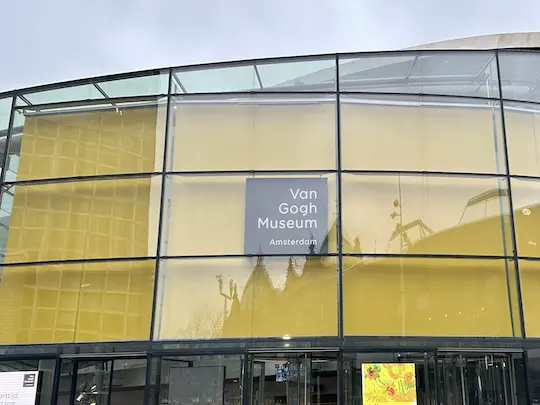
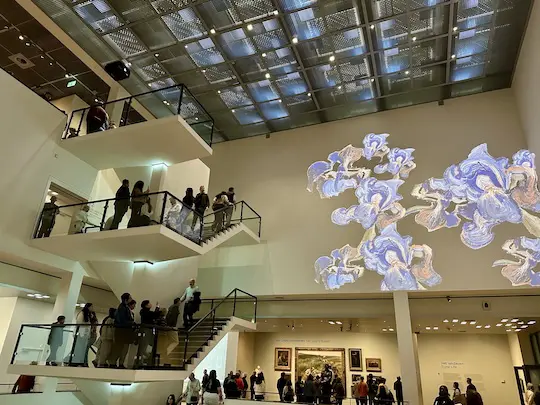
Before even focusing on the art, you notice the building itself. The original structure was designed by Dutch architect Gerrit Rietveld and opened in 1973. Its design is functional and minimalist, with clean lines and a focus on clarity – qualities that align well with the museum’s chronological presentation.
Later, a modern exhibition wing by Japanese architect Kisho Kurokawa was added. This extension introduces curved glass surfaces and a more fluid architectural language, creating a contrast with the earlier rectangular structure. As you move between the two sections, the transition is subtle but noticeable.
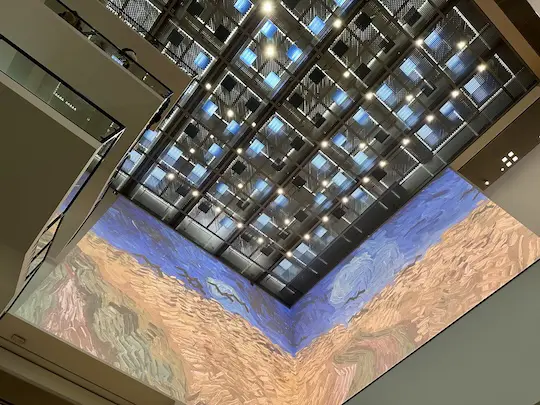
Inside, the museum makes strong use of natural light. Large windows and open spaces prevent the galleries from feeling enclosed. Staircases and walkways are positioned in a way that keeps the flow intuitive. The architecture supports the experience rather than competing with the artworks, which makes it easier for you to stay focused as you move from one period to the next.
First Impressions
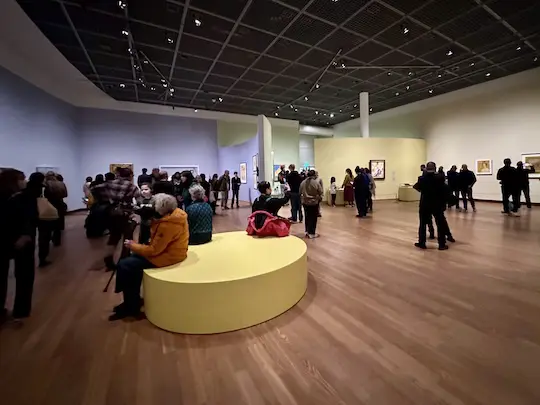
Inside, the layout is clear and intuitive. You move through wide corridors and well-lit rooms, with a steady but manageable flow of visitors. The museum is designed to guide you through the life and work of Vincent van Gogh without requiring much planning in advance. Signage is minimal but sufficient, and the overall experience feels structured rather than overwhelming.
You quickly notice that this is not just an art gallery displaying isolated masterpieces. Instead, the museum presents a continuous narrative. Each room builds on the previous one, allowing you to follow Van Gogh’s development step by step.
A Chronological Journey
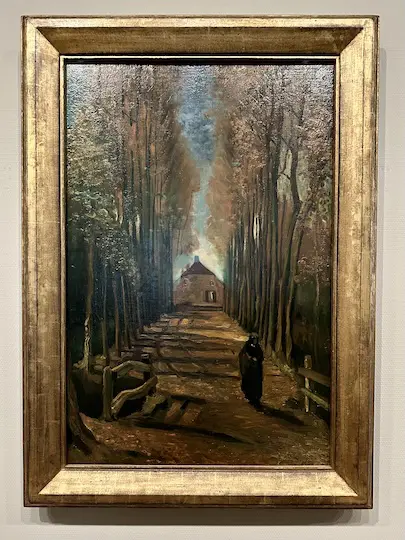
The visit begins with Van Gogh’s early works. These paintings are noticeably darker in tone, often depicting rural life and working-class subjects. Scenes like The Potato Eaters reflect his interest in everyday people and his attempt to portray them with honesty rather than idealization. At this stage, the technique appears more traditional, and the color palette is restrained.
As you move through the exhibition, you begin to see gradual changes. The transition to his Paris period introduces lighter colors and a more experimental approach. Influences from Impressionism and other contemporary artists become visible. Brushstrokes loosen, compositions feel more dynamic, and the use of color becomes more varied.
What stands out in this section is how clearly the museum presents these shifts. Instead of presenting only the final, well-known style, it shows the process behind it. You are able to trace how exposure to new ideas and environments influenced his work.
The Well-Known Works
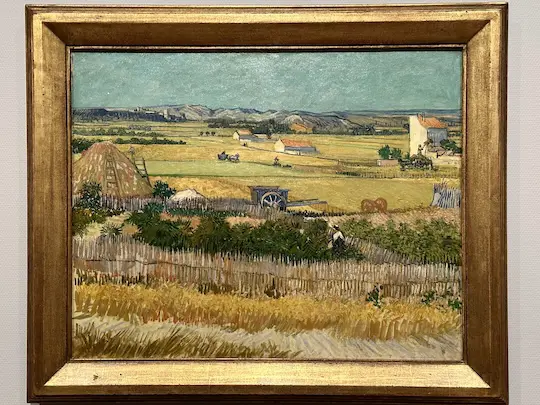
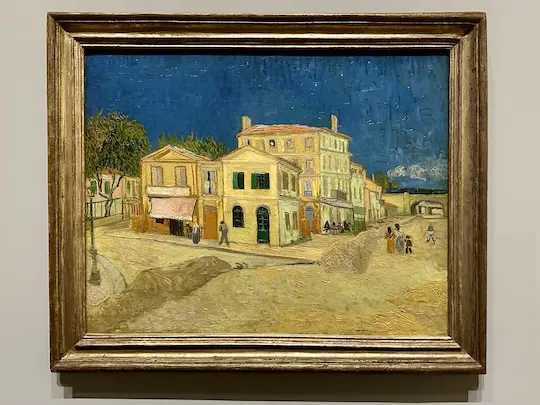
Further along, you reach the period that most people associate with Van Gogh. His time in the south of France marks a clear turning point. The colors become stronger and more direct, with a particular emphasis on yellows, blues, and greens.
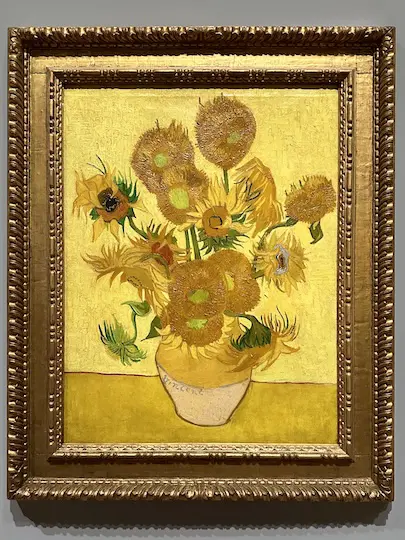
Paintings such as Sunflowers and The Bedroom are presented in relatively open spaces, allowing you to view them without feeling rushed. Even when other visitors are present, the arrangement makes it possible to spend a few moments observing details.
One aspect that becomes especially clear in person is the texture of the paint. The surfaces are more layered and tactile than they appear in reproductions. Brushstrokes are visible and deliberate, giving the works a physical presence that is difficult to capture in images.
This section of the museum tends to attract the most attention, but it is integrated smoothly into the overall narrative rather than treated as a separate highlight.
Context and Background
In addition to the paintings, the museum includes letters and contextual information that help you understand Van Gogh’s life and working process. These materials are presented in a clear and accessible way, often placed alongside the artworks they relate to.
Reading excerpts from his correspondence provides insight into his thoughts about painting, his ambitions, and his challenges. The tone of these texts is informative rather than interpretive, allowing you to form your own impressions.
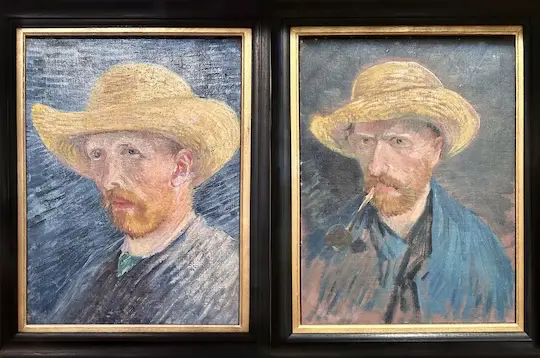
Self-portraits play a significant role in this part of the exhibition. They appear at different stages of his life and offer a consistent point of reference as his style evolves. You can compare changes in technique, color, and expression across time.
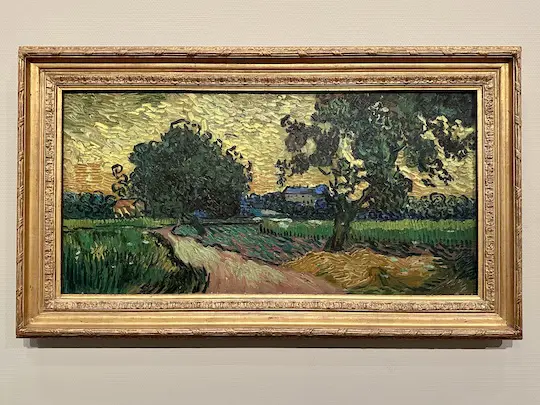
The later works, including those created during his stays in Saint-Rémy and Auvers, show a further intensification of style. The compositions become more expressive, and the brushwork more pronounced. At the same time, the museum maintains a balanced presentation, focusing on documented facts rather than speculation about his personal struggles.
The Overall Experience
As you progress through the museum, the structured layout makes it easy to maintain a sense of direction. There is a clear beginning, middle, and end, which helps you understand the progression without needing to revisit earlier sections.
By the time you reach the final rooms, you have seen not only the most famous paintings but also the broader context in which they were created. This gives you a more complete understanding of Van Gogh’s development as an artist.
When you leave the building and return to Museumplein, the experience feels coherent and well-paced. Rather than focusing on individual highlights, the museum provides a comprehensive overview that connects the works into a larger story.
For you as a visitor, the value lies in this clarity. The Van Gogh Museum does not require prior knowledge to be meaningful, but it rewards attention and curiosity. It is a place where you can see well-known artworks, while also gaining a structured understanding of how they came to be.
Practical Tips for Your Visit to the Van Gogh Museum in Amsterdam
Here are some practical tips if you would like to visit the Van Gogh Museum.
- Book your ticket online in advance to avoid long queues – especially during the high season, the museum is often sold out.
- The best times to visit are early in the morning or late in the afternoon, when it is less crowded.
- Use the free audio guide (also available in German) to learn even more about the artworks.
- Photography is allowed, but without flash.
- Plan at least 2-3 hours to enjoy the exhibition at a relaxed pace.
- And don’t forget: bags larger than A4 size must be left at the cloakroom.
How to Get to the Van Gogh Museum
The Van Gogh Museum is centrally located at the Museumplein and is easy to reach:
- By tram: Take lines 2, 5, or 12 to the “Museumplein” stop.
- On foot: From Amsterdam Central Station, it is about a 20-25 minute walk through the city center.
- By bicycle: Amsterdam is bike-friendly – there are many bicycle parking spaces nearby.
- By car: Parking spaces nearby are limited, but Q-Park “Museumplein” is a good option.