Last Updated on February 20, 2026 by Christian Heide
A road trip from Amsterdam to Giethoorn is one of those simple but magical journeys that remind you how varied a small country like the Netherlands can be. In just a couple of hours, you can leave behind the busy streets and canals of the capital and arrive in a quiet village where boats replace cars and time seems to slow down.
The Drive from Amsterdam
We started our day early, just after breakfast, to make the most of the quiet morning roads. Leaving Amsterdam by car is surprisingly easy once you’re past the central areas. Within 20–30 minutes, the dense cityscape begins to give way to open Dutch countryside.
The drive to Giethoorn takes about 1.5 to 2 hours depending on traffic and your exact starting point. The route passes through classic Dutch scenery: flat green fields, grazing cows, wind turbines, and waterways that shimmer beside the highways. It’s not a dramatic landscape, but it’s peaceful and distinctly Dutch.
As you get closer to Giethoorn, the roads become smaller and quieter. You start seeing more signs for boat rentals and parking areas, which is a good indication you’ve arrived in the right place.
Arriving in Giethoorn
Giethoorn is not built for heavy car traffic in its center, and that’s part of its charm. Visitors typically park on the outskirts in designated parking lots. From there, it’s a short walk into the village proper.
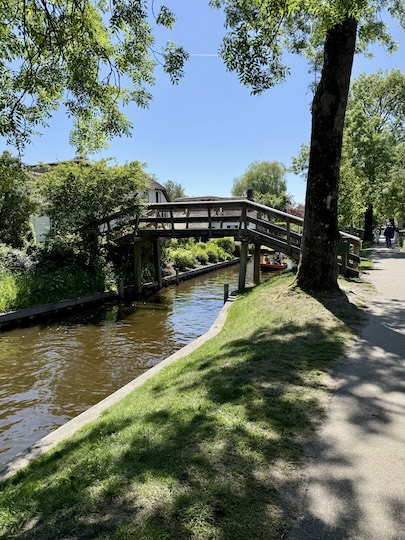
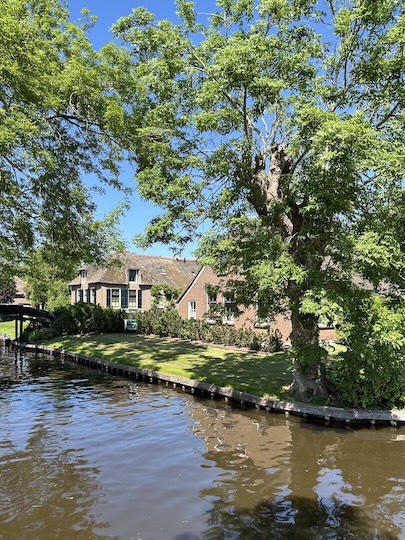
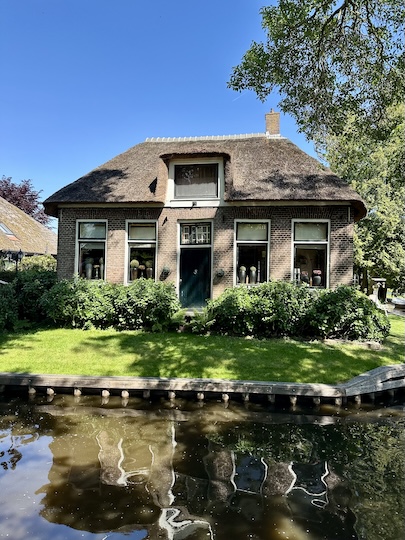
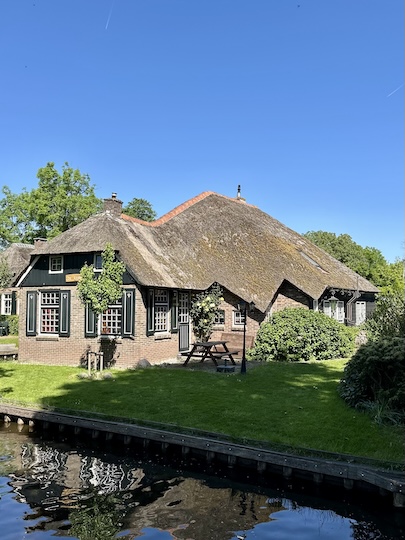
The moment we stepped out of the car and began walking toward the canals, the atmosphere changed. The sound of traffic faded and was replaced by birds, soft conversations, and the gentle splash of water. That first view of the canal—lined with thatched-roof cottages and arched wooden bridges—felt like walking into a postcard.
The houses look almost storybook-like, with neat gardens full of flowers and lawns that slope down to the water. Many homes have small private docks with boats tied up. It’s immediately clear that water is the main mode of life here.
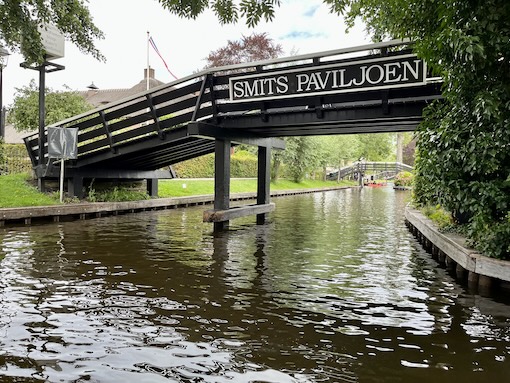
The Boat Trip in Giethoorn
No visit to Giethoorn is complete without getting on the water. The canals are the village’s streets, and exploring them by boat is the main activity.
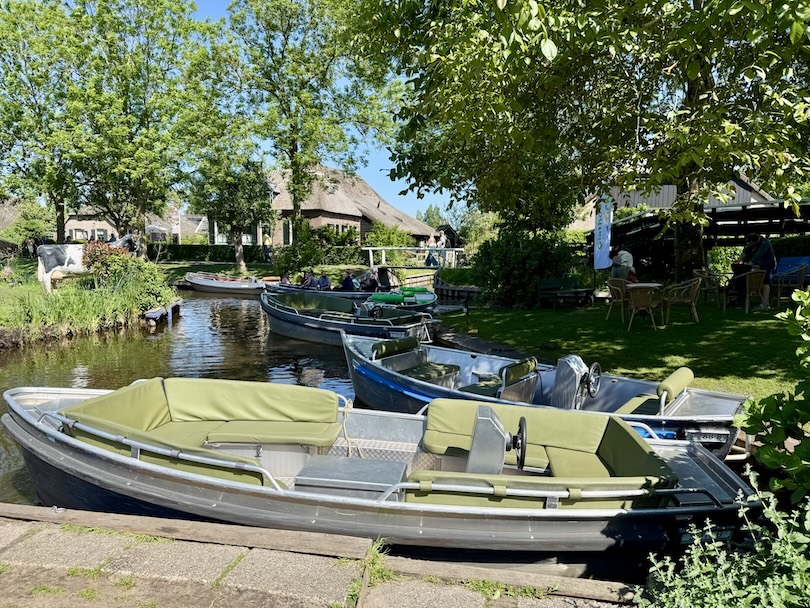
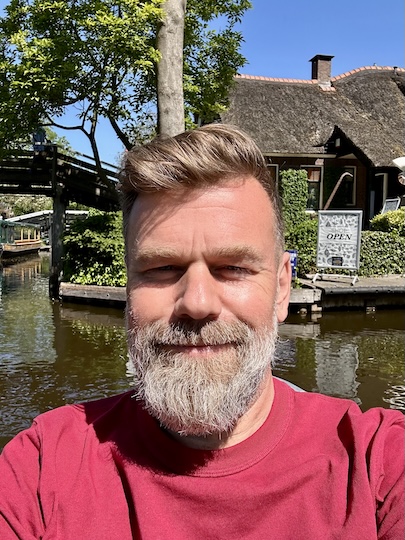
There are several rental companies offering different options: guided tours on larger boats, small electric boats you can drive yourself, and even kayaks or canoes. We chose a small electric boat, often called a “whisper boat” because it’s so quiet.
The rental process was simple. After a brief explanation of how to steer and control the speed, plus a map of the canals and lakes, I was on my way. You don’t need a boating license, and the controls are beginner-friendly.
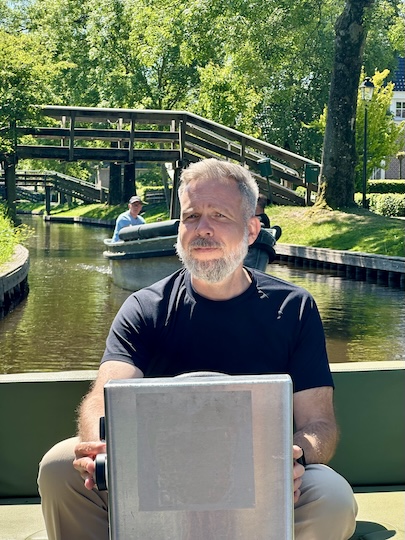
Gliding through the canals is incredibly relaxing. The boat moves slowly, giving you time to admire the houses, wave at people on passing boats, and duck slightly under low wooden bridges. Every turn reveals another charming view: a tiny island garden, a family enjoying lunch by the water, or ducks swimming alongside.
Some routes lead out to wider lakes just beyond the village. These open areas give you beautiful panoramic views of reeds, water, and sky. It feels more like being in nature than in a tourist destination.
We spent about three hours on the boat, which felt just right. Long enough to explore, take photos, and enjoy the calm without feeling rushed. It also gave as time to have a picknick on board! We had bought bread and cheese and milk in the local supermarket. Absolutely recommendable!

Wandering the Village
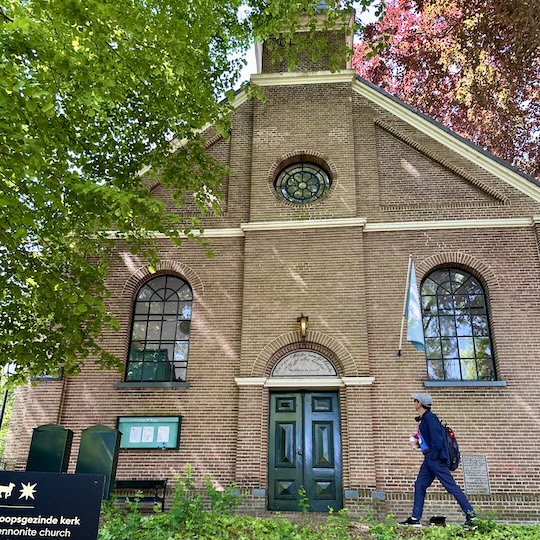
After returning the boat, we explored Giethoorn on foot. Narrow paths run along the canals, crossing over little bridges and past quiet homes. Even though Giethoorn is popular, it still manages to feel peaceful if you take your time.
There are a few small museums that share local history and explain how the village developed around peat harvesting and waterways. These stops add context and make you appreciate how the landscape shaped life here.
In the afternoon, we picked a café with a terrace right by the canal. Sitting outside with a piece of cake and a coffee while boats drifted past was one of the highlights of the day. It’s the kind of place where you naturally slow down, linger longer, and enjoy the moment.
There are also small shops selling souvenirs, Dutch sweets, and local crafts. They’re pleasant to browse without being overwhelming.
Practical Tips for a Car Trip
If you’re driving, arriving earlier in the day helps with parking and crowds. Late morning to mid-afternoon tends to be the busiest period, especially on weekends and in summer. Avoid weekends – you will have large groups arriving by buses.
Wear comfortable shoes, as you’ll walk more than you expect. A light jacket is useful because the weather can shift quickly, even on sunny days.
If you’re visiting in peak season, consider reserving a boat in advance. And always check parking locations beforehand so you don’t accidentally drive into restricted areas.
The Drive Back
Heading back to Amsterdam in the early evening was smooth. The setting sun over the fields made the return drive especially pretty. After a day of slow boats and quiet canals, returning to the lively energy of the city felt like re-entering a different world.
A car trip to Giethoorn is easy, flexible, and rewarding. It lets you experience a softer, quieter side of the Netherlands that contrasts beautifully with Amsterdam. If you’re looking for a day that combines scenic driving, time on the water, and a peaceful village atmosphere, Giethoorn is well worth the journey.